
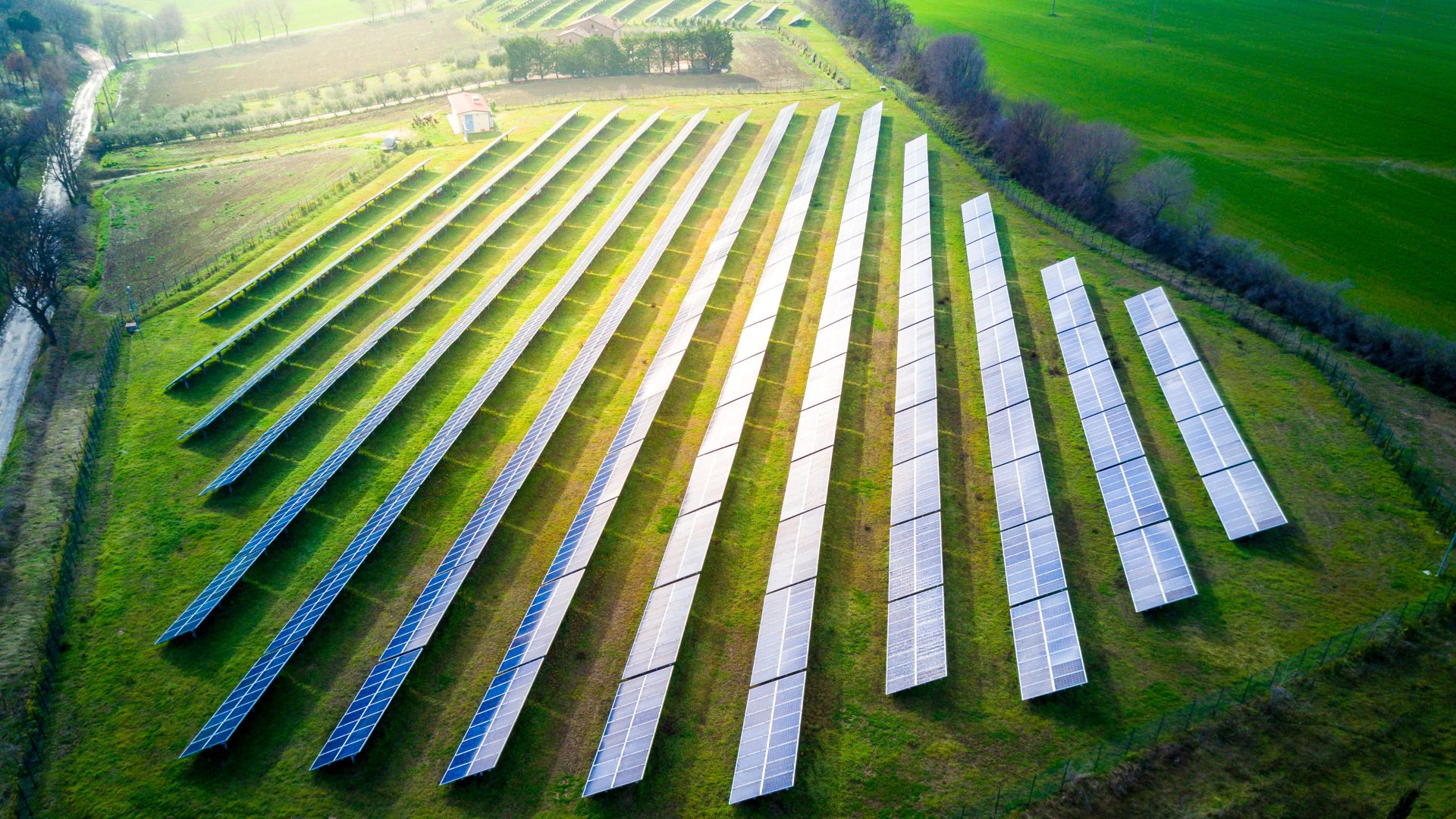
Wind and solar farms do not use water to generate electricity. Unlike coal, nuclear, and some natural gas power plants, wind power and solar power do not need to be located near lakes, rivers and streams for a water supply. With much of the Southeast in drought conditions, wind and solar are saving millions of gallons of water, which can then be used for agriculture or other purposes.
What Power Plants Use Water and Why
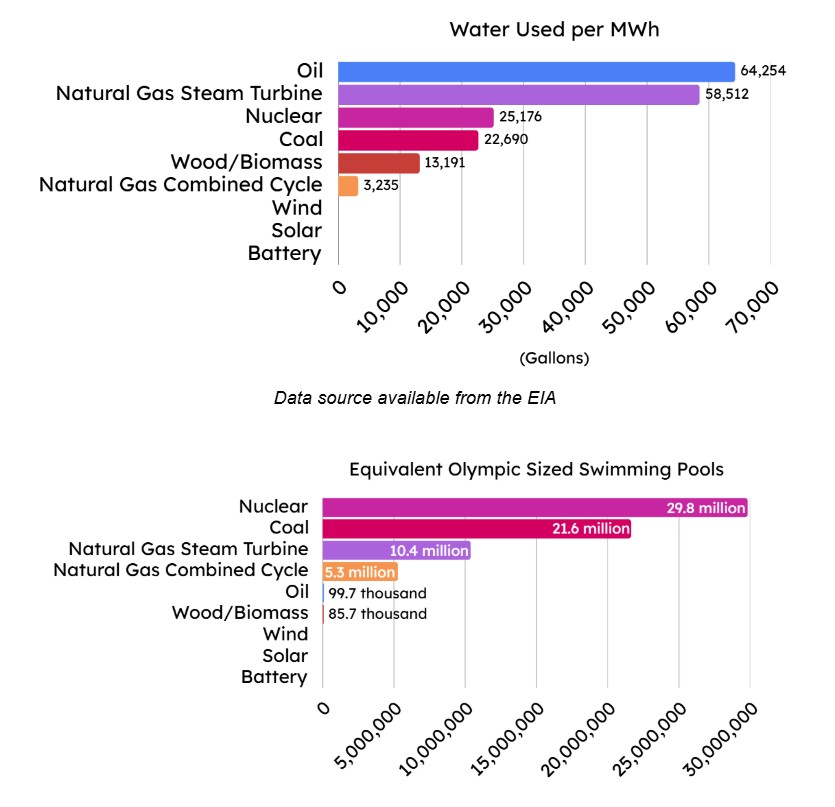
The Energy Information Administration (EIA) wrote that in 2021, some 47.7 trillion gallons of water was withdrawn for power plant electric generation across the United States. Based on that data, coal-fired power plants used about 22,690 gallons of water for every megawatt-hour of electricity generated in 2024, withdrawing 14 trillion gallons overall. Or, to think about it another way, that’s about 21 million Olympic-sized swimming pools full of water.
Natural gas units used about 10 trillion gallons of water. Nuclear reactors used about 25,176 gallons per MWh, and withdrew a total of almost 20 trillion gallons of water. Cooling water ponds or lakes, particularly those used for nuclear reactors, can use up tens of thousands of acres of land.
The so-called “thermal” generation resources like coal, nuclear, and some gas units rely on very high heat to boil water, create steam pressure, and then to use that steam to spin turbines connected to generators. Some steam can be condensed and put back into the local waterways; however, hot water evaporates quickly, and that evaporation can cause significant quantities of water to be lost for local usage.
Hydroelectric dams also rely on water resources. But instead of boiling water, dams rely on the kinetic energy of water flowing to spin turbines to generate electricity. Dams can also reduce overall water availability due to evaporation.
Wind turbines do not use water to generate electricity. The wind itself is captured by large blades that directly turn a generator. Some water is used during wind turbine construction, especially for concrete manufacturing; however, this one-time-use pales in comparison to the constant water consumption needs of thermal plants.
Similarly, solar farms do not use water to generate electricity. Solar photovoltaic panels capture the sun’s light and convert it directly into usable electricity. There are no moving parts in a solar panel. An older solar technology, known as Concentrated Solar Power or CSP, uses thousands of mirrors to concentrate sunlight onto a boiler on a tall tower. The steam from the boiling water turns a turbine. CSP is an outdated technology and much more expensive than solar farms; it is not a primary technology.
Are Water Resources Constrained Now?
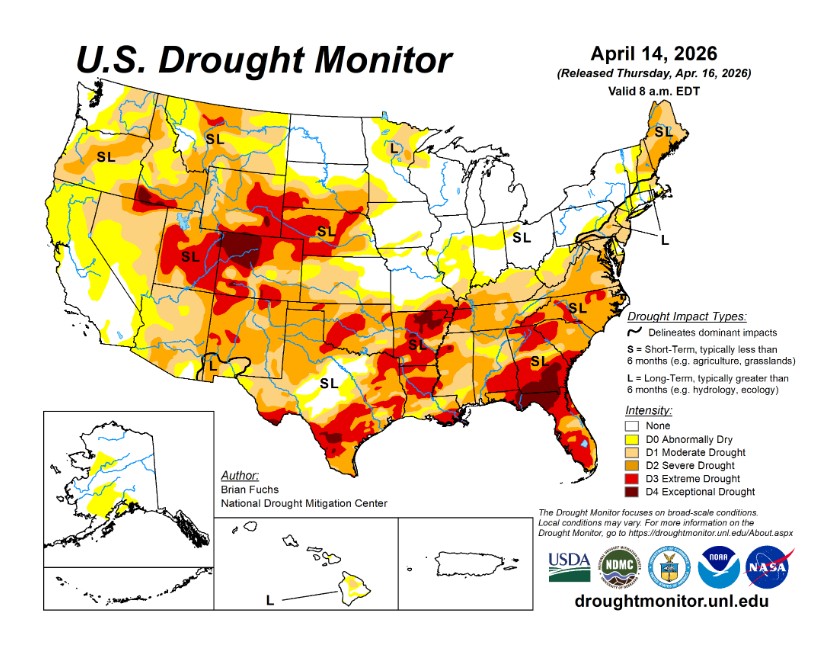
Yes. Much of the United States is currently in severe or extreme drought conditions. States like Mississippi have been designated natural disaster areas due to the lack of water. Arkansas is currently in the 7th driest year on record, and wildfire risks are increasing. Hunters throughout the Delta region have noticed a severe lack of water, which combined with warmer weather have hampered duck hunting efforts. Poor water quality in Arkansas’ major trout hatcheries led to a massive fish kill in November. In response, the Arkansas Game & Fish Commission set lower catch limits for trout anglers. Georgia peanut farmers are delaying planting, hoping for rain. Cities across the Southeast are issuing water conservation advisories and restrictions.
Fortunately, wind and solar farms can provide the power necessary for economic development while not putting additional pressure on our precious water supplies. As our local and state leaders evaluate growing power demand needs, especially for data center growth, conserving water resources must be considered a top priority.
In the meantime, pray for rain, and build renewable energy.


