
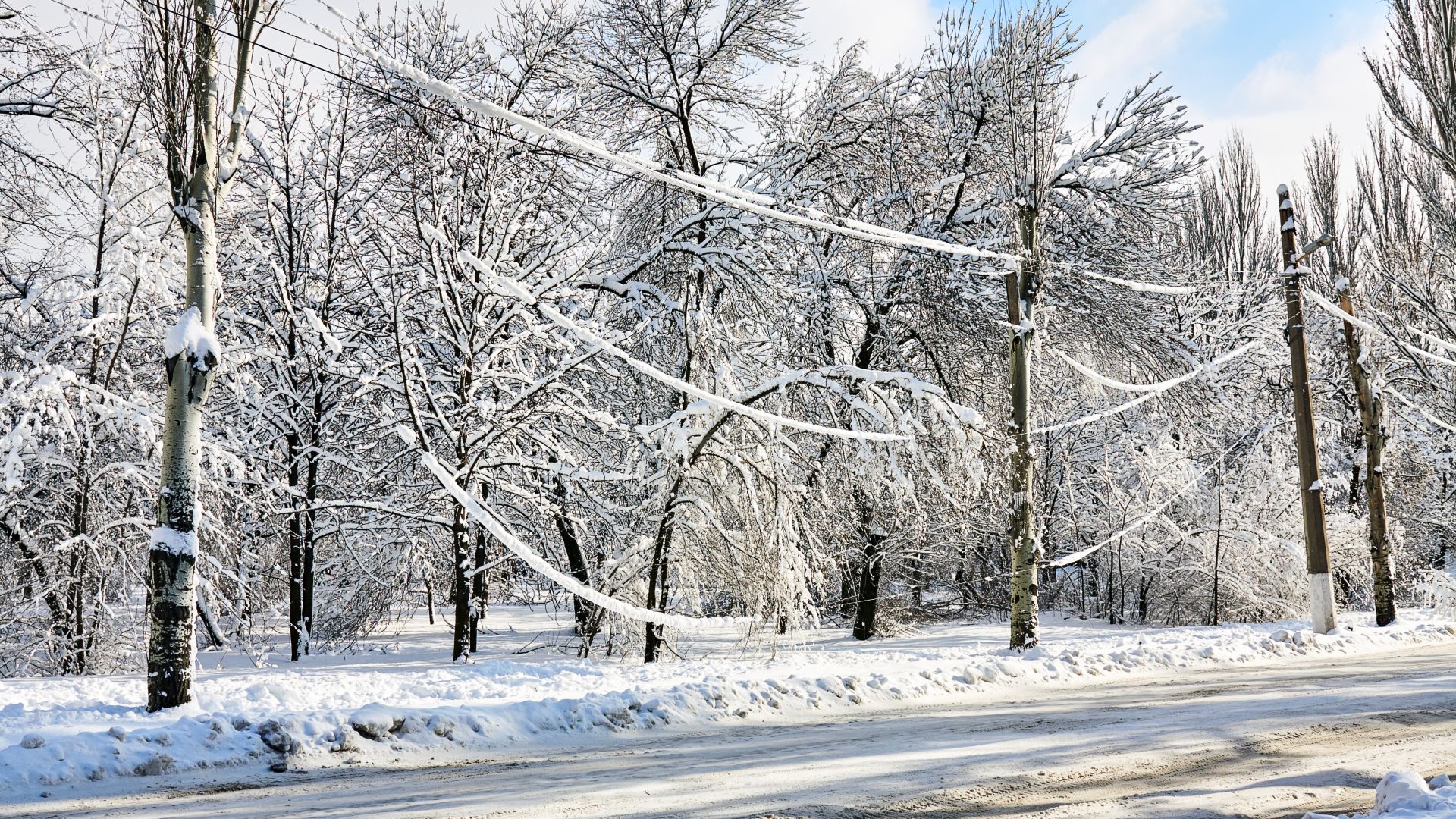
Winter Storm Fern left millions without power from Eastern Texas to Tennessee, with significant impacts over Northern Louisiana and across Mississippi. Nashville's Davidson County saw 195k outages on Sunday, with more than 100k remaining by Thursday.
For the electric power grid to provide energy at home, three major parts all have to be working: generation, transmission, and distribution. Generation includes power plants like wind, solar, and natural gas power stations. Transmission lines move bulk power from power plants to load centers. Distribution lines are smaller power lines that zig zag neighborhoods and deliver power to the end users. If one link in this chain is disrupted, power does not flow. For Winter Storm Fern, the major disruptions occurred due to downed distribution lines, not generators or transmission lines.
Ice loading on distribution networks and downed trees were the primary causes of the outages, with lengthy restoration times for many stretching into early this week. According to the Edison Electric Institute, over 65,000 mutual assistance workers from 43 states and Canada worked around the clock, restoring power to more than 200,000 customers - a true testament to the importance of the mutual assistance programs that utilities engage in that leverage work crews from other less affected utilities during times of great need. Despite those efforts, with ice loading and fallen tree branches, some remained without power for over a week.
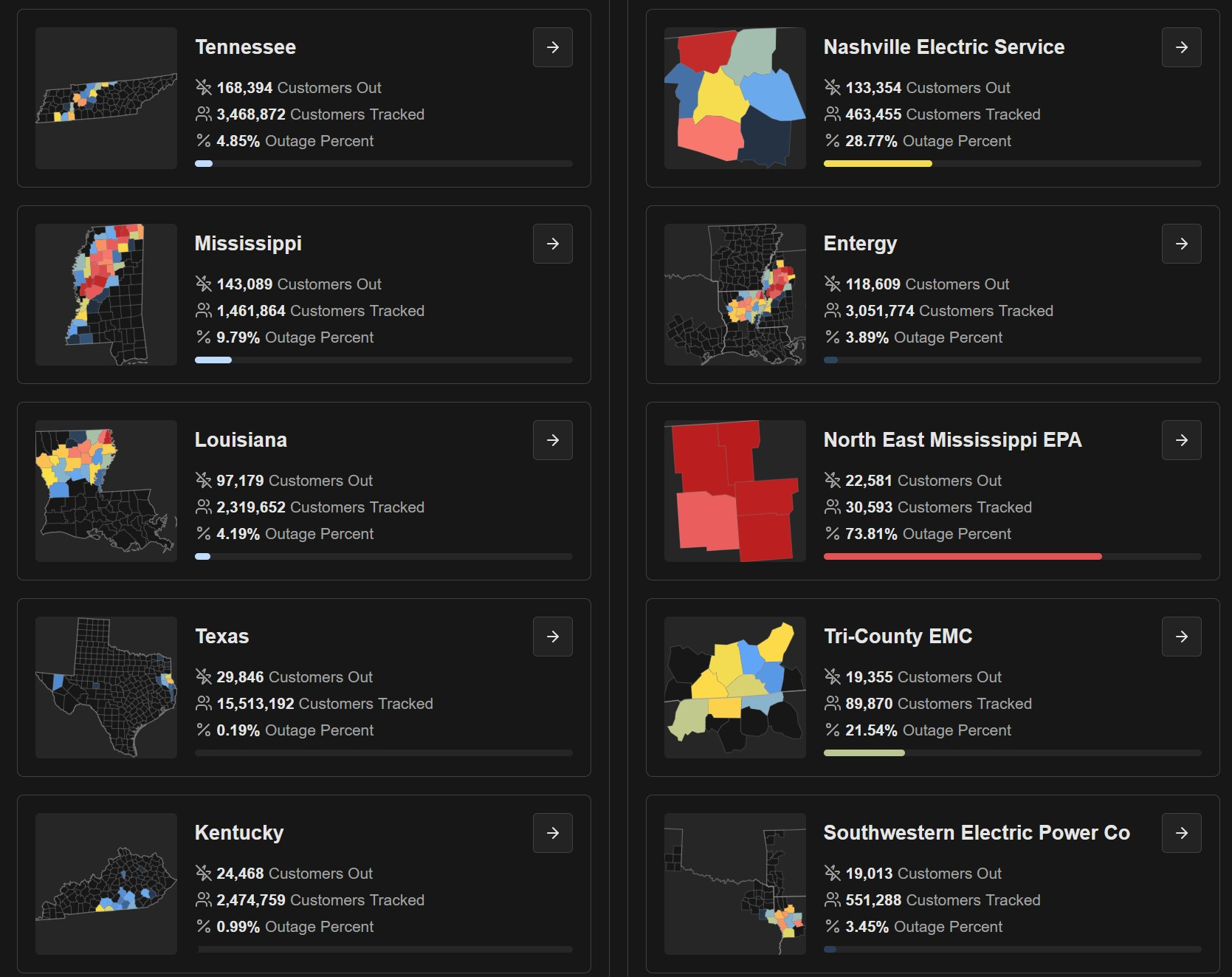
It may be a cold comfort to those impacted by the ice storm, but despite these outages, transmission and generation across Midcontinent Independent System Operator (MISO), Southwest Power Pool (SPP), Electric Reliability Council of Texas (ERCOT) and other grids kept many outside of this impact area safe and warm during Fern.
Renewables and Other Resources Performed Well
Unlike past storms like Elliott and Uri, forced power plant outages were limited and renewable generation performed well. It’s also worth noting that solar capacity has grown dramatically since 2021. Across Texas, Louisiana, Mississippi and Arkansas, for example, in both the MISO and SPP grids, utility-scale solar has increased from 353MW in 2021 to 4,821MW by 2025 - a 13x growth in just five years. Solar generation during cold daytime temperatures made a significant difference.
Wind resources also contributed, despite MISO South not being known for wind. Tunica Wind, owned by AES in the Mississippi Delta, reported some curtailment, but that was due mostly to transmission constraints, not equipment failure from frigid temps. Similarly, wind in MISO North, and SPP, with much colder temps, did not appear to experience significant equipment related outages.
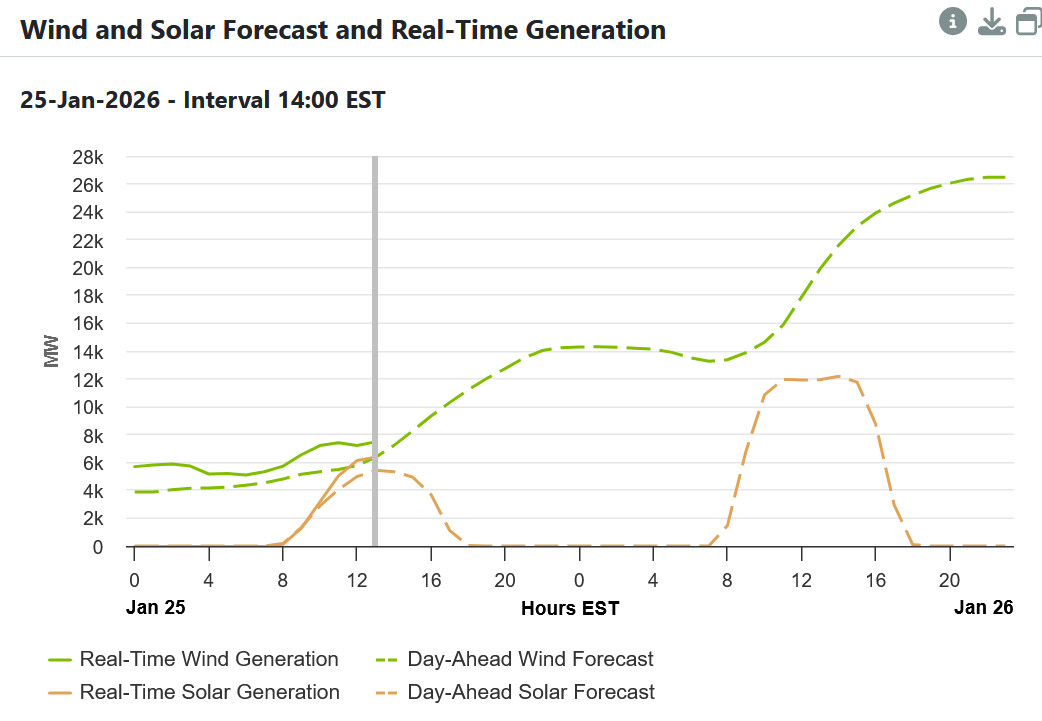
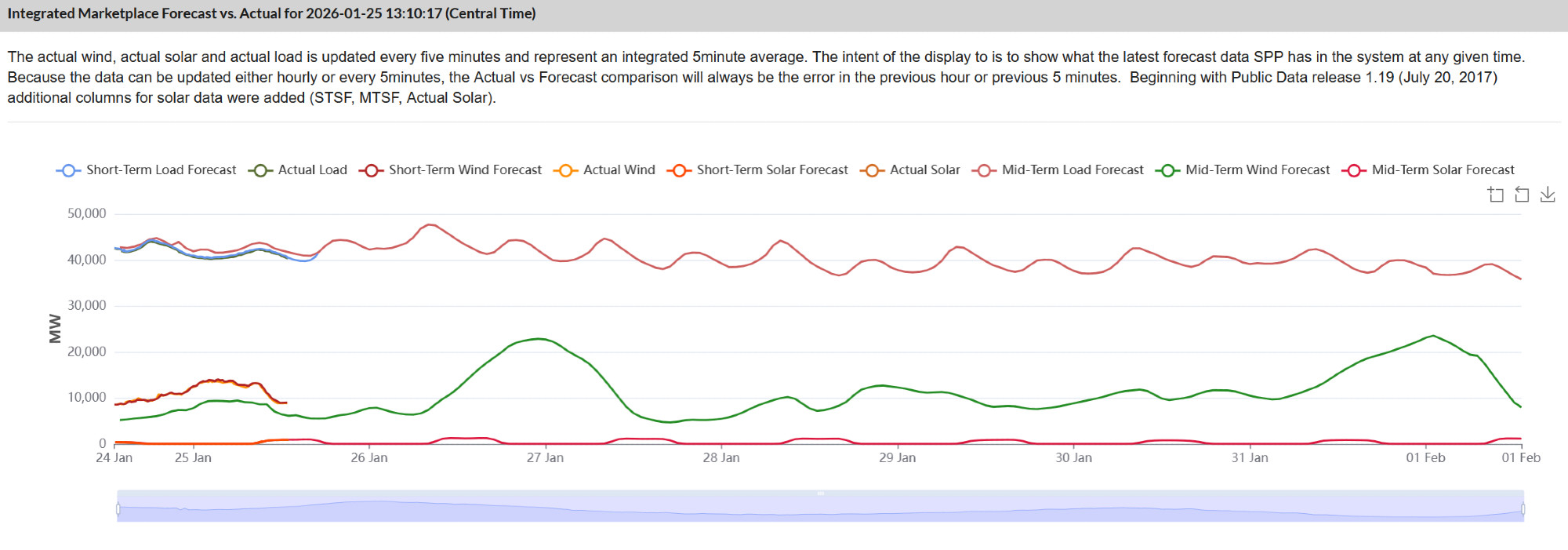
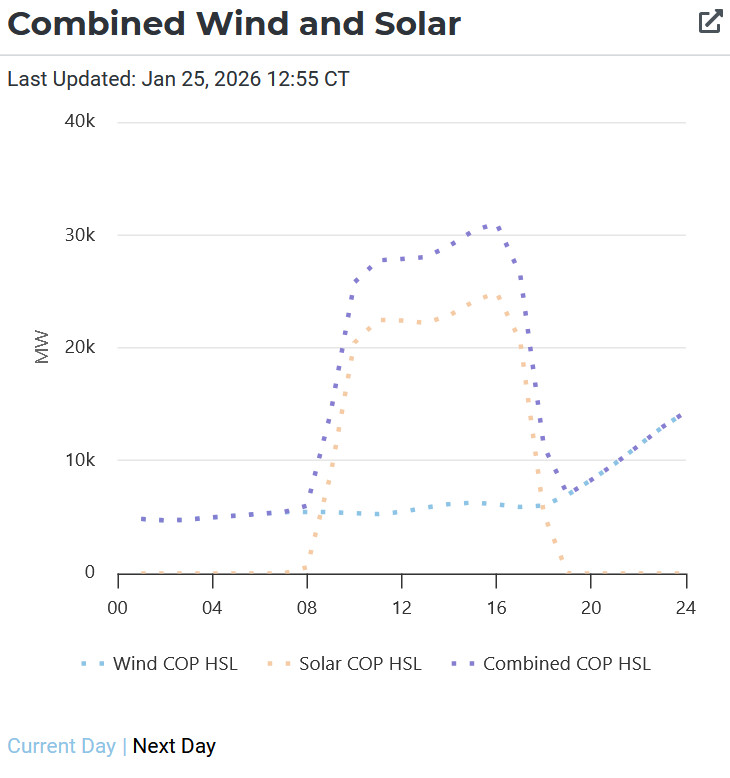
Source: Sunday, Jan. 25 forecast data from left to right - MISO (wind forecast in green, solar in orange), SPP (wind forecast in green), and ERCOT (wind forecast in blue, solar in orange) <click to enlarge>
ERCOT has added 41.7GW of solar, wind, and energy storage since Uri hit in 2021. Nearly half was solar, and about one-third of this total was energy storage. As Fern moved into Monday, Jan. 26, a forecast emerged across MISO, SPP and ERCOT that indicated much much higher output from renewables, which did not disappoint. In ERCOT, solar provided about 1% more than natural gas from Noon-3:00pm ET, with energy storage serving an eye-popping 9% of morning demand. During the daytime, wholesale prices ranged from $144/MWh at 8:00am to -$1.99/MWh at 4:00pm ET.
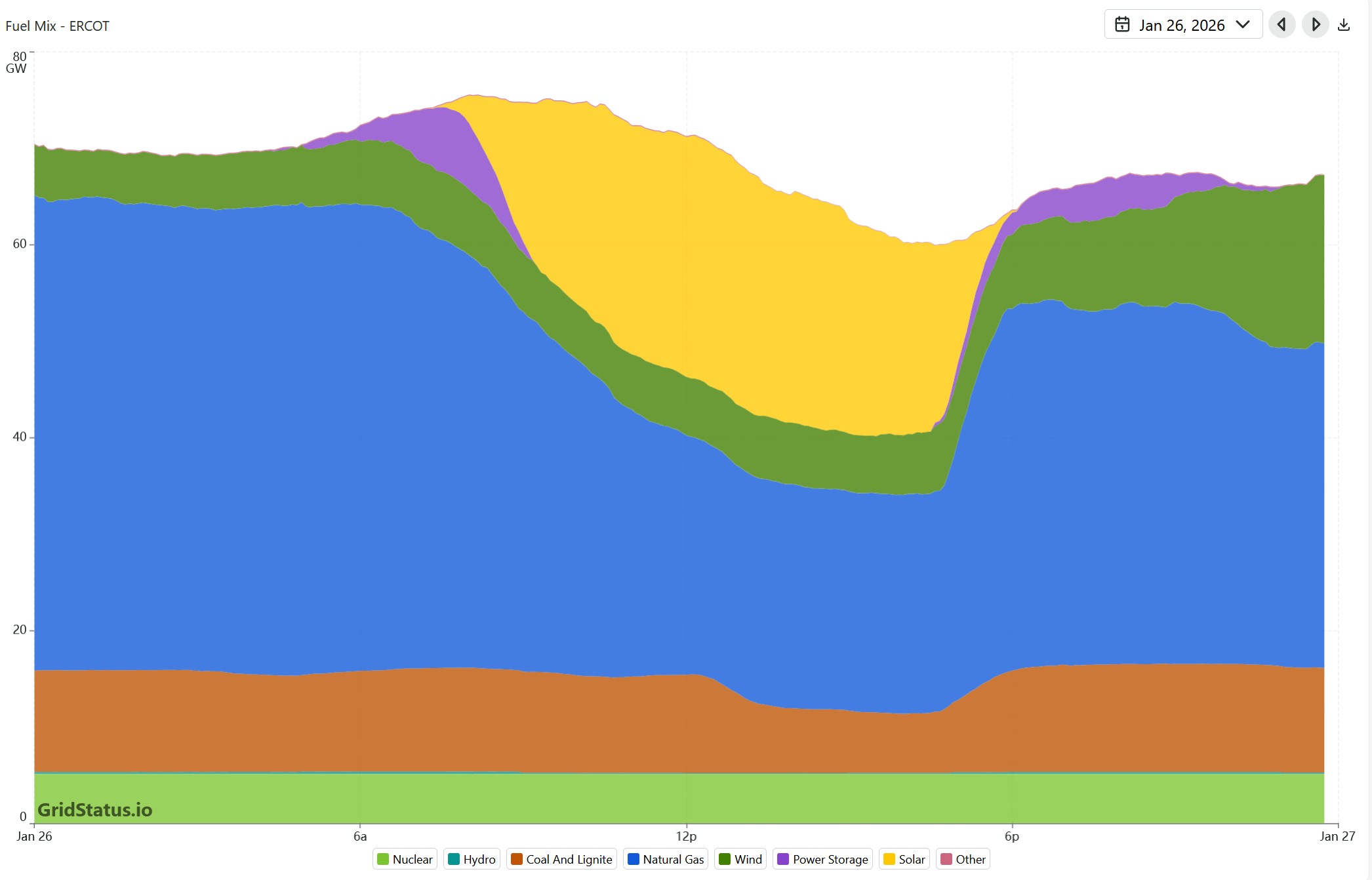
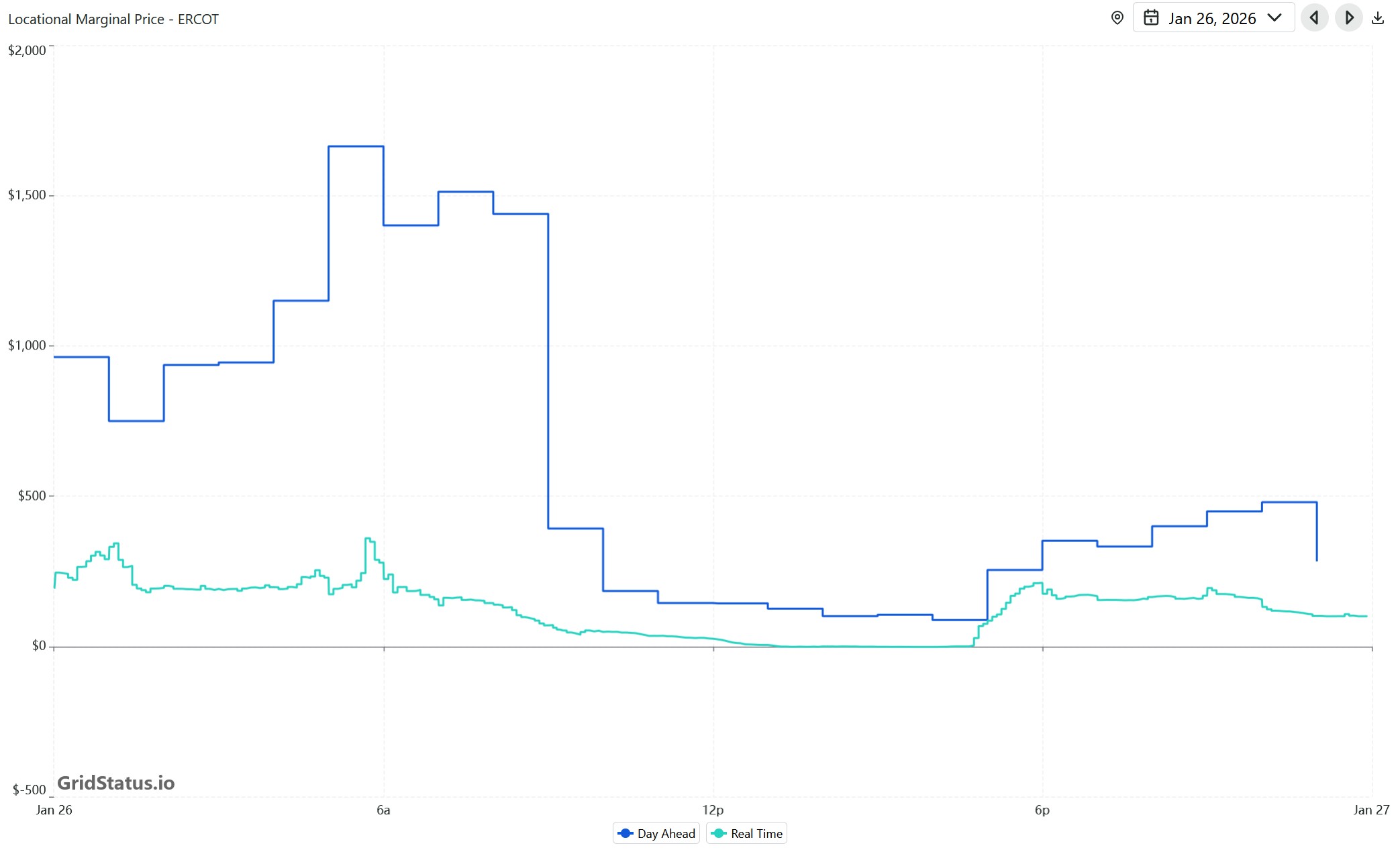
Source: GridStatus.io indicates on January 26 about 1% more solar than natural gas serving demand from noon-3pmET, with almost 10% of demand being served in the morning by energy storage. Wholesale prices remained between $144/MWh at 8am to $-1.99/MWh at 4pmET. <click to enlarge>
In MISO, where temperatures ranged from -11°F in Minneapolis to 31°F in New Orleans, solar and wind provided roughly one-third of 91.5GW demand from 2:00-4:00pm ET on January 26. Generation outages remained suppressed at about 23GW. Notably, no emergency advisory was called on January 26 unlike the EEA2 two days earlier.
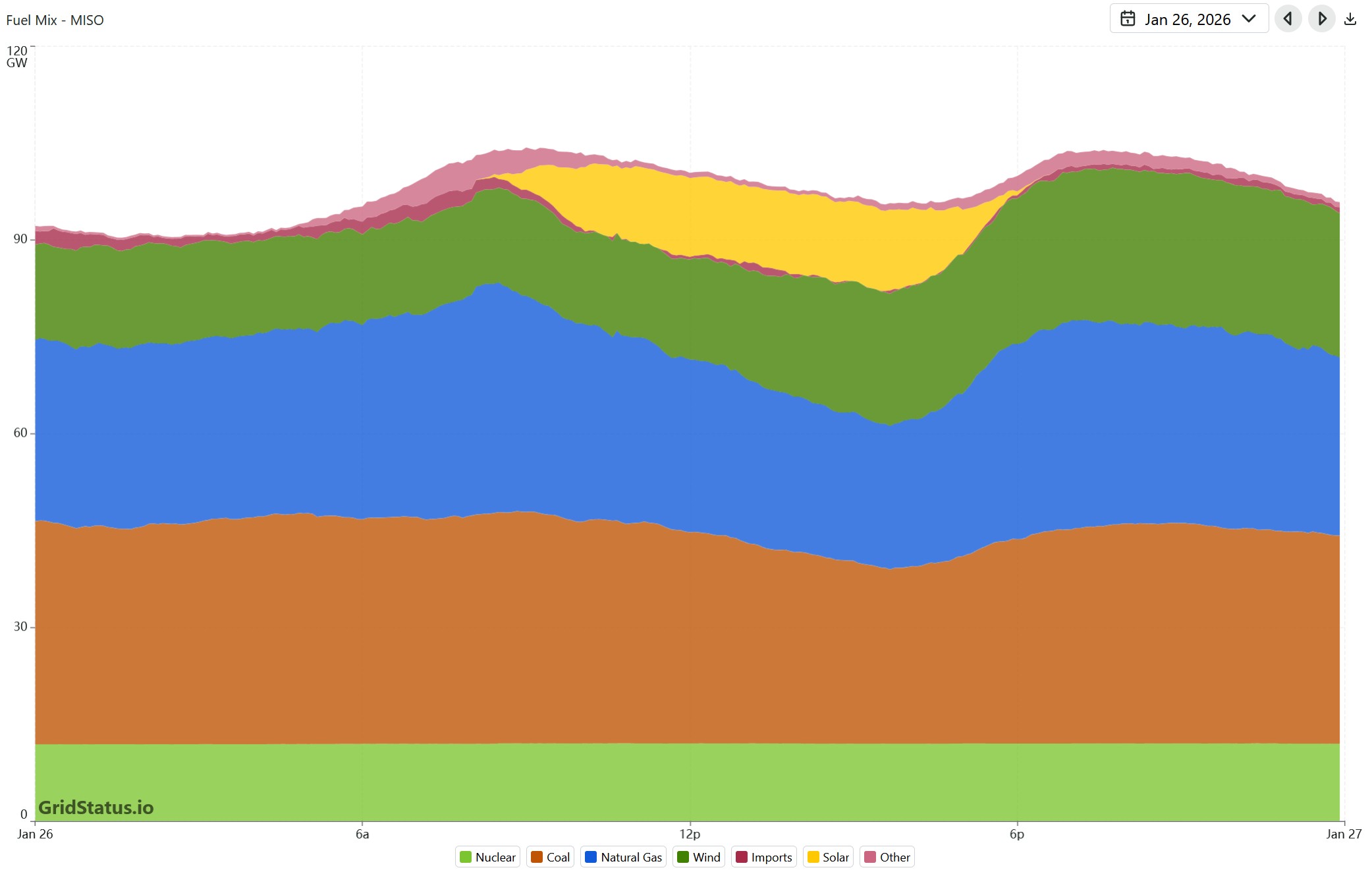
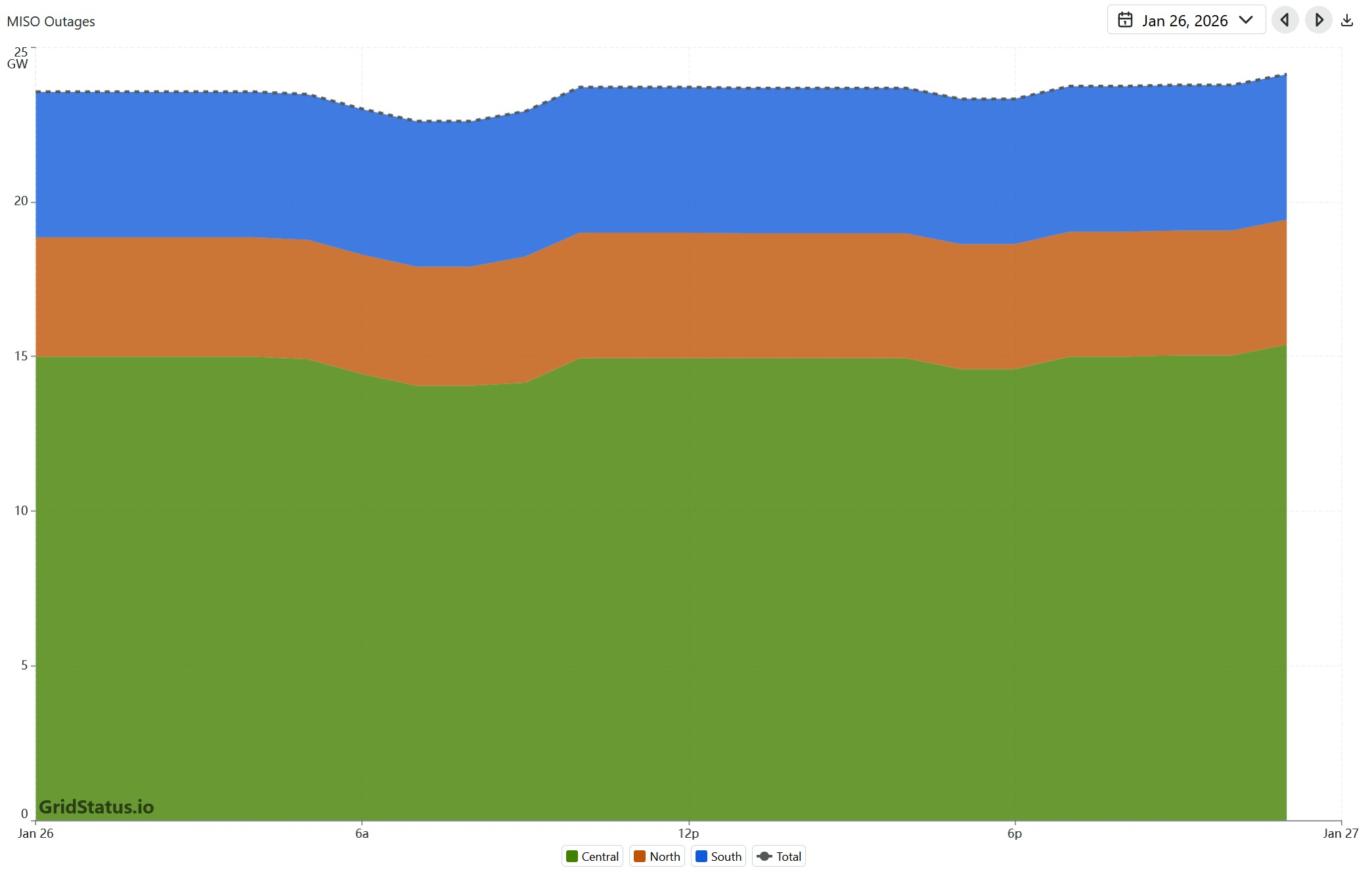
Source: GridStatus.io <click to enlarge>
Renewables and energy storage clearly played a big role in both keeping prices down and providing power to the grid both during Winter Storm Fern and during the frigid temps that laid across utility service territories in MISO, SPP and ERCOT. It’s true that power plant outages were not as extreme as those experienced during storms like Uri and Elliott in previous years in these footprints, which were instrumental in helping keep grids stable. Weatherization efforts for power plants were critically important in ERCOT especially, where so many power plants were unavailable five years before. The ability for large grids to import power during times of great need was also an important factor during Fern.
Transmission Interties are Vital Links Between Regions
One thing that is evergreen during extreme weather events is the importance of transmission. The common refrain that we need to build ‘a grid bigger than the weather’ is not just an empty slogan - it’s a strategy that yields consistent benefits even when connections between large grids are limited like today.
When there’s excess supply in one grid, the market sends a price signal to incentivize power to flow from one large grid to another with higher demand and lower supply. Throughout Fern and the following weekend, there were many instances when this interchange was quite significant for MISO, PJM, SPP, ERCOT and neighbors.
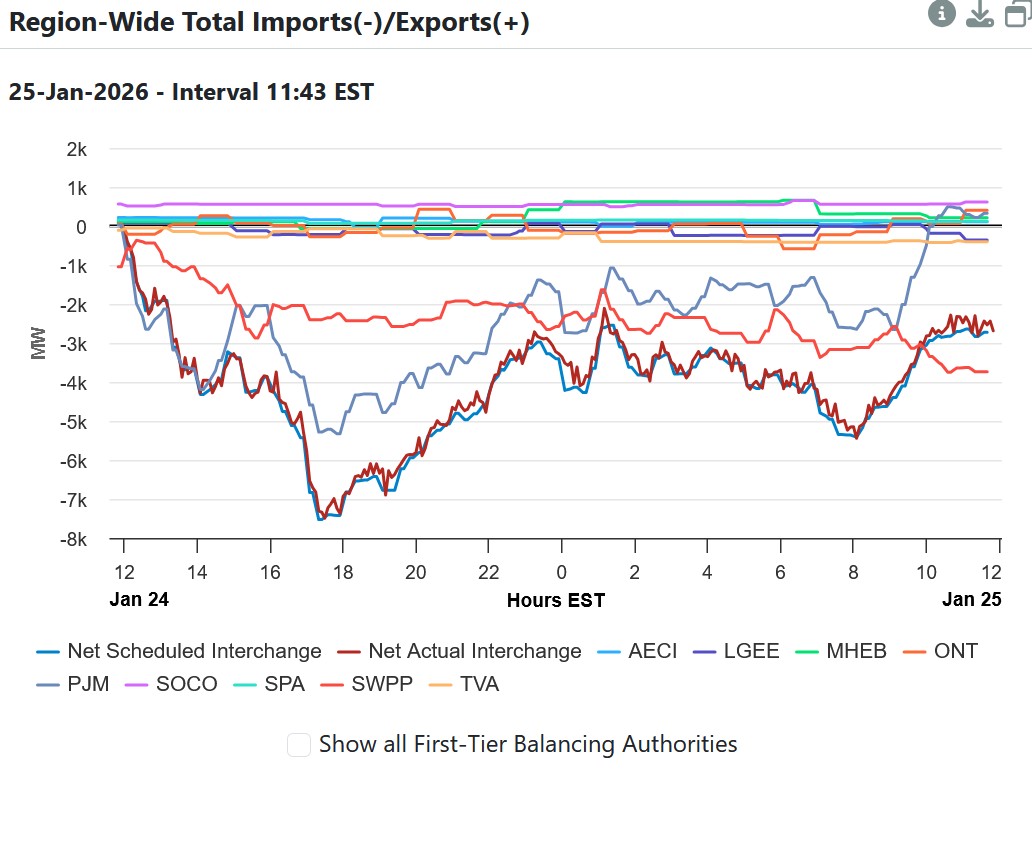
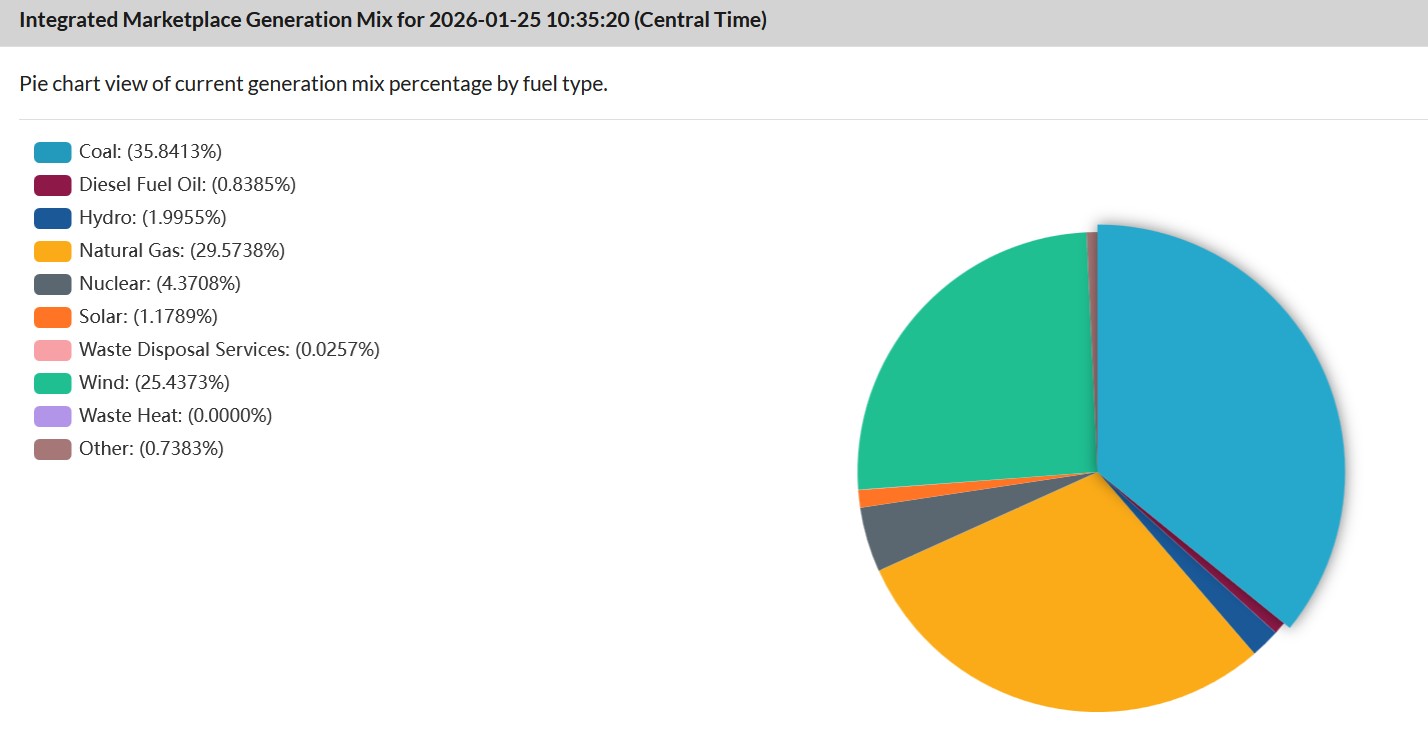
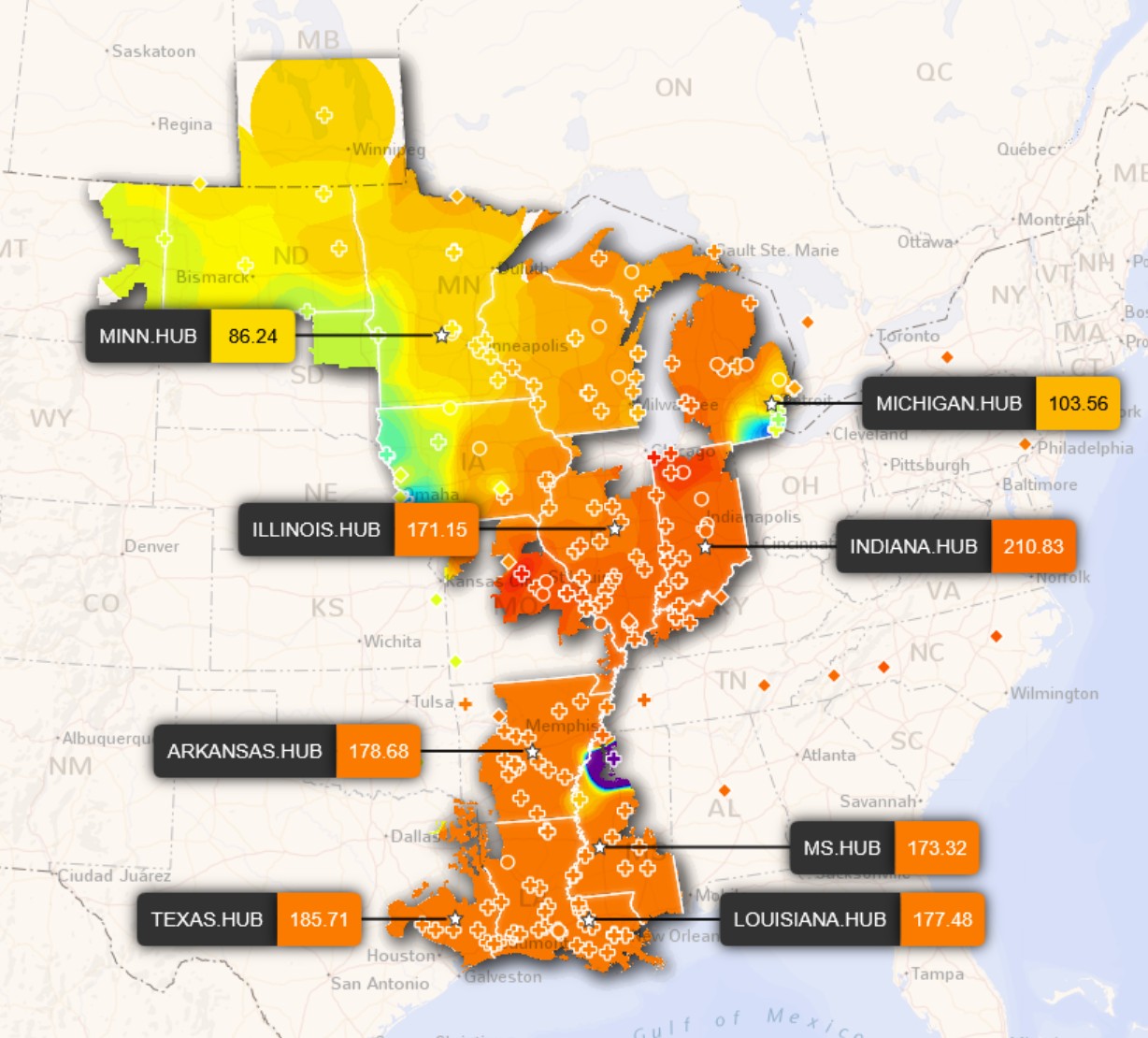
Source: MISO interchange data, MISO realtime LMP map and SPP generation (timestamp 10:35amCT) <click to enlarge>
Notably, on January 25 when wind and solar were a modest portion of the energy mix in MISO, imports from SPP of up to almost 3 GW’s helped to keep prices low in MISO’s western footprint. It was also clear that at moments of need overnight on January 25 that imports of a little over 7 GW’s from PJM and SPP were critical to maintaining reliability in MISO North during the EEA2.
This data highlights not only the importance of interregional ties, but also the value of MISO’s original Multi-Value Projects in MISO North and forthcoming portfolios that will better connect the footprint in the north. The value of interregional ties in MISO North is only increased by transmission lines that can facilitate flows both West to East and in the opposite direction.
The disparity between MISO North and South can be seen at other times when prices are much higher in the south than the north. Limited access to wind from SPP and MISO North are reflected in higher prices on Monday, Jan. 26, when wind was performing very well in large quantities in MISO North and SPP.
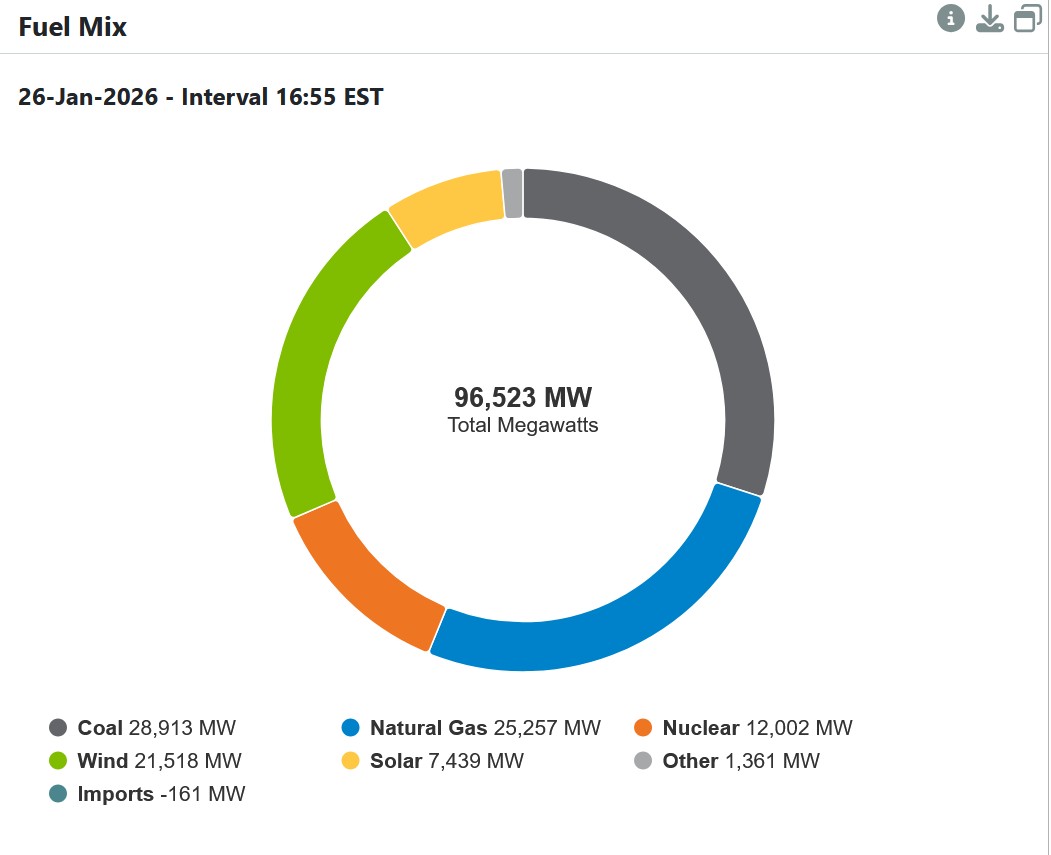
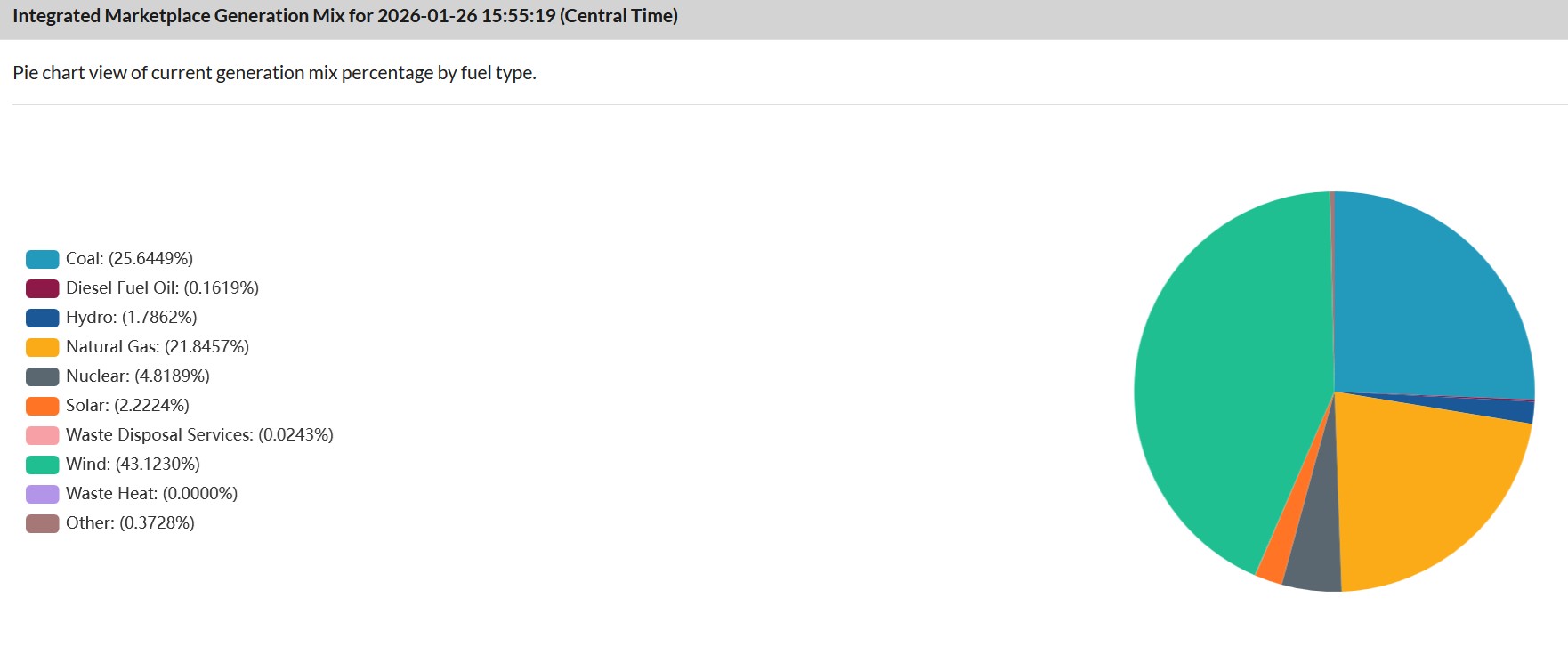
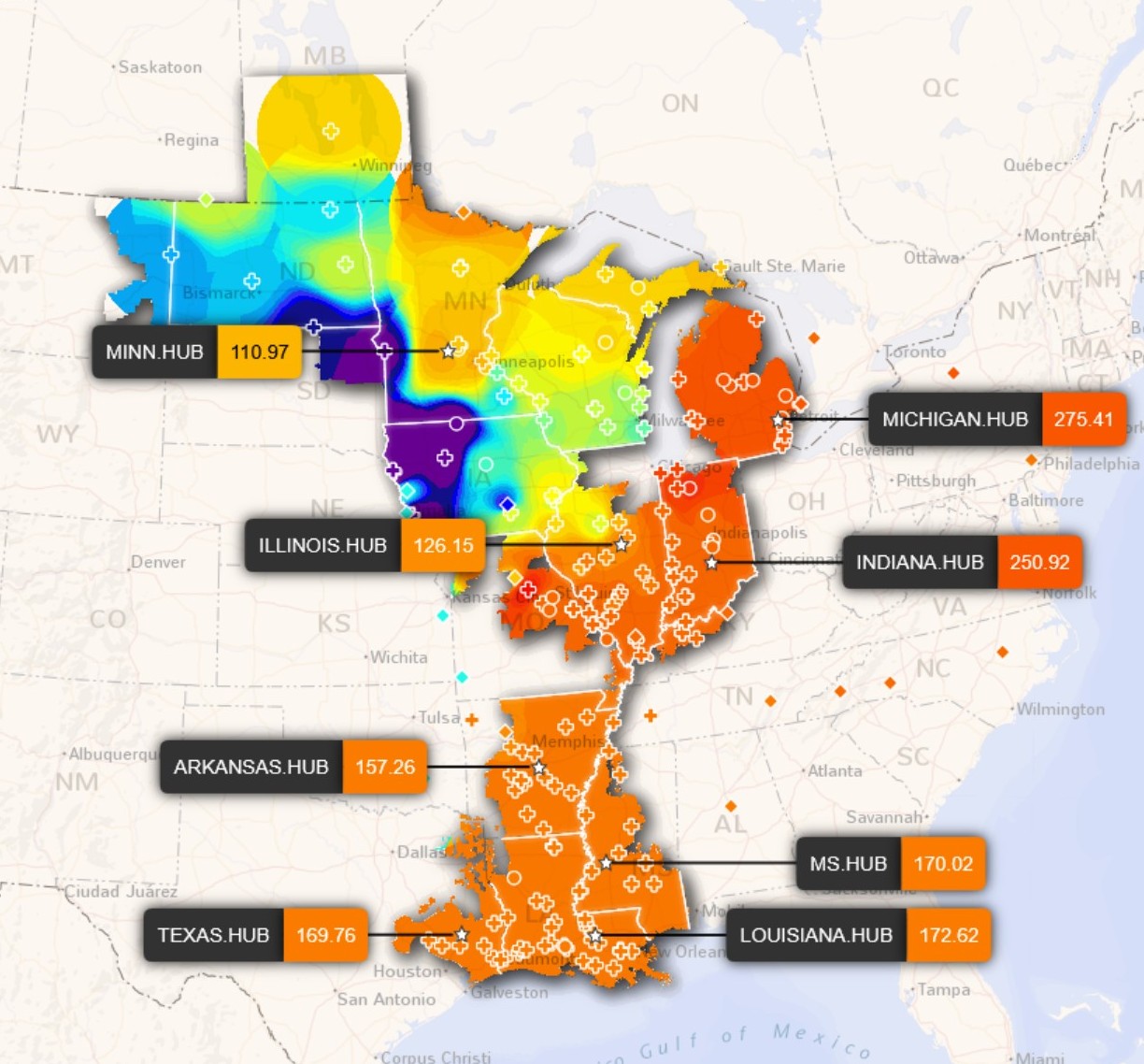
Source: MISO realtime generation and wholesale prices, SPP realtime generation <click to enlarge>
Greater connection between MISO North and South could have provided access to lower cost options during this time driving down wholesale prices. While MISO South did not have a repeat loadshed event like that experienced during Winter Storm Uri, costs remained high in MISO South for most of the week from January 24-February 1.
Final Takeaways
Energy Storage's Evolution: Energy storage has emerged from the theoretical 'Swiss Army Knife' of the grid talked about on energy podcasts for years to a critical part of a reliable grid that can provide capacity when it's needed.
Diversification: Diversification is key to a modern, reliable, affordable portfolio of energy generation.
Grid Scale: A grid bigger than the weather provides surplus capacity to places that need it.
Renewables & Affordability: Renewables are a key tool for affordability, especially given natural gas price spikes in the winter.
Future Planning: It is incumbent upon planners, utilities, stakeholders and regulators to work together to build a better grid that is flexible, affordable and reliable not just for next year's storm, but far into the future.
Connectivity Benefits: A well-connected system is one that benefits all customers with access to affordable and reliable energy.
Storm Performance: The bulk electric grid held fast, with ample production from renewable energy and energy storage.
The grid is in the midst of an energy transition. More wind, solar and energy storage were available during Winter Storm Fern than in previous storms, but it’s also clear that a functioning fleet of legacy generation is necessary in the short term. It is clear also that renewables are a key tool for affordability, especially given natural gas price spikes in the winter. Further, ERCOT’s clearly shown that energy storage has emerged from the theoretical ‘Swiss Army Knife’ of the grid talked about on energy podcasts for years to a critical part of a reliable grid that can provide capacity when it’s needed; it provided a host of ancillary services that were important to weathering extreme periods of demand. Diversification is key to a modern, reliable, affordable portfolio of energy generation.
Plenty of opportunities to improve the transmission system still exist across large grids. While recent multi-value transmission approved by MISO is navigating state approval and permitting processes, then finally becomes steel in the ground over the next five years, the usefulness of these lines is becoming more and more apparent during these types of extreme events.
MISO and SPP’s 2024-25 Coordinated System Plan (CSP) is currently in the process of developing a portfolio of multi-value transmission solutions for MISO South and SPP. State regulators should support solutions that better connect these two footprints in the South, where greater access to SPP’s wind and MISO South’s solar can help hedge the costs of power during extreme events. Additionally, it’s important to have increased transfer capability during storms, regardless of generation type. A grid bigger than the weather provides surplus capacity to places that need it.
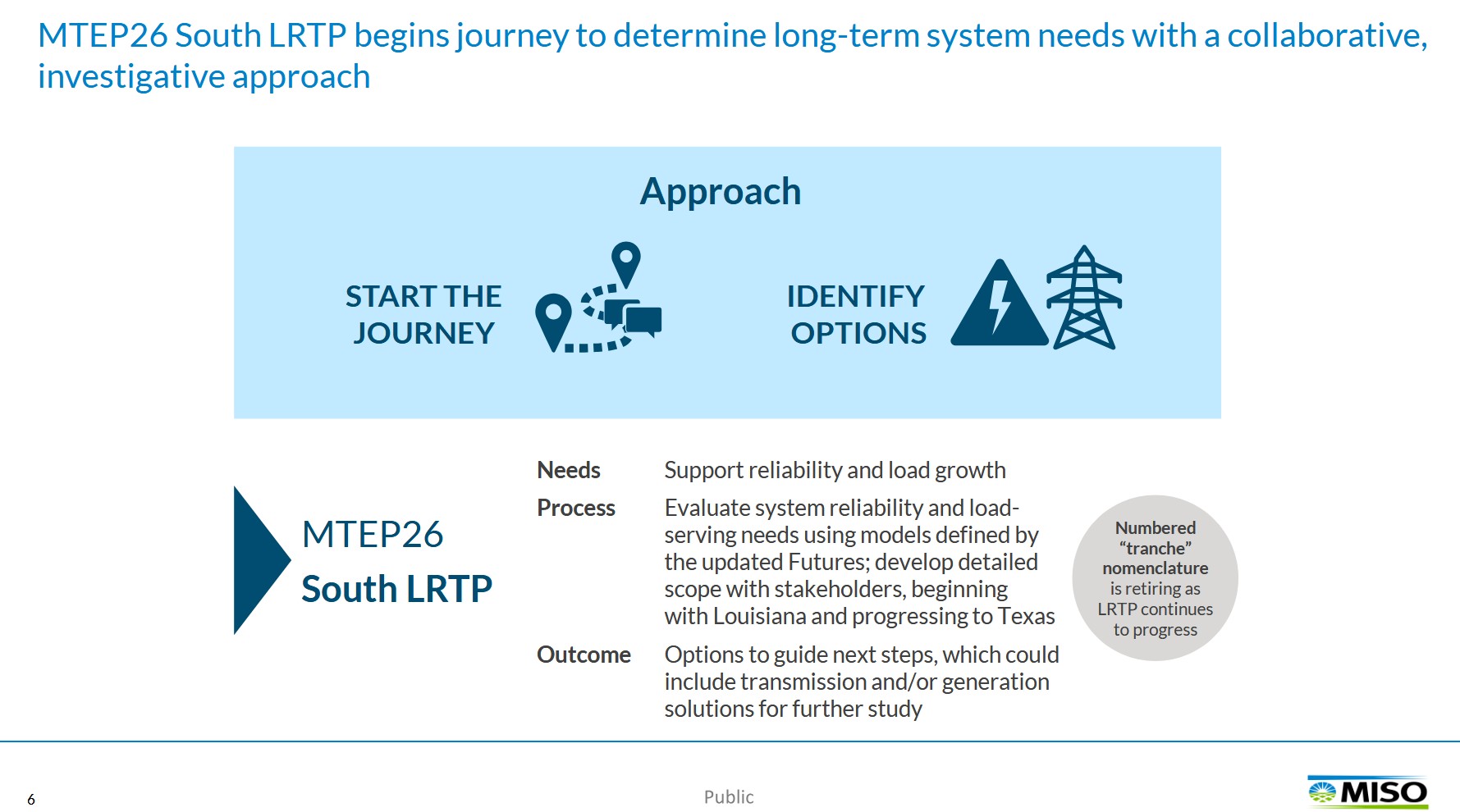
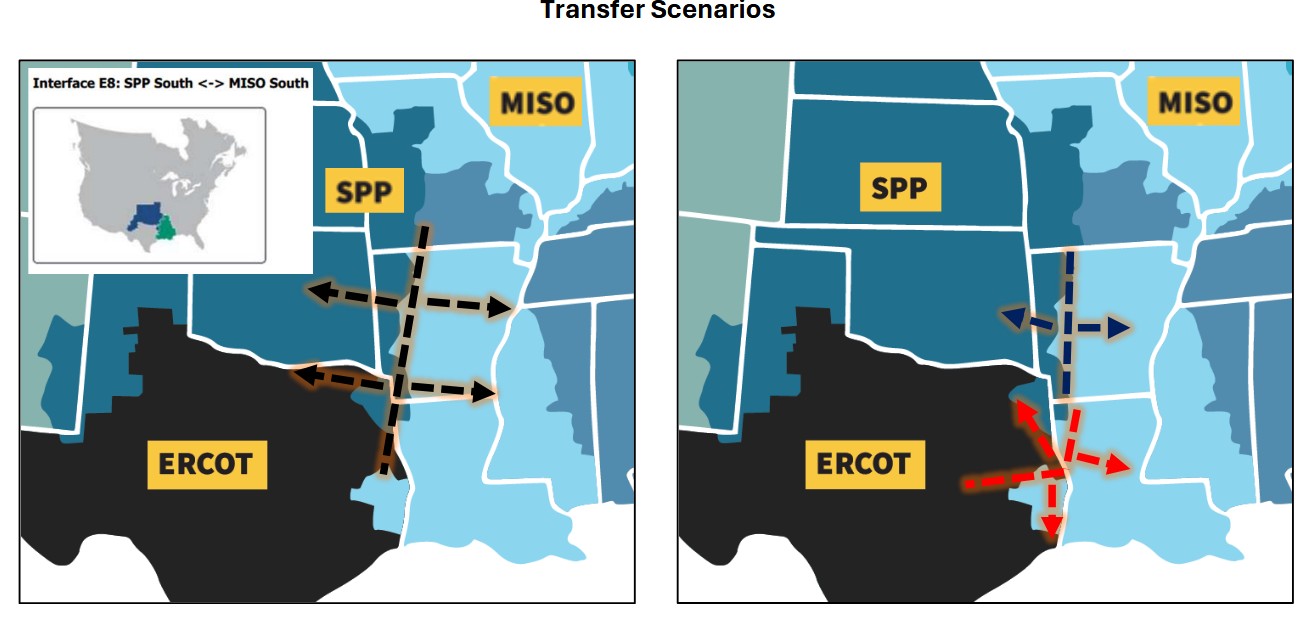
Source: November 2025 MISO Transmission Planning Update to the Entergy Regional States Committee, and SPP-MISO 2024-25 Coordinated System Plan Study Scope document <click to enlarge>
MISO is launching a Long Range Transmission Planning (LRTP) effort in MISO South this year as well, which will analyze ways of alleviating issues in MISO South that have persisted for decades. If MISO South utilities and regulators want to continue attracting economic development from large tech firms like Amazon, Google and META, support for this long-term planning effort is crucial. A well-connected system is one that benefits all customers with access to affordable and reliable energy.
Winter Storm Fern was predicted to have devastating consequences for grids across the Eastern Interconnection and ERCOT, and certainly it did for many in North Louisiana, Mississippi and Tennessee. But largely, the bulk electric grid held fast, with ample production from renewable energy and energy storage. While this winter storm was fairly uneventful in most areas - outside of the significant damage to the distribution network from ice and tree branches - it is incumbent upon planners, utilities, stakeholders and regulators to work together to build a better grid that is flexible, affordable and reliable not just for next year’s storm, but far into the future.


