
- Reliability and affordability are the South’s entry point to climate action: when extreme weather hits, these communities often feel it first.
- Trust and truthful storytelling determine whether projects succeed: Misinformation and top-down engagement fuel backlash; ownership, dignity, and “moving at the speed of trust” unlock partnership.
- Clean energy in rural America must be built with community terms, not imposed on communities: Whether it’s land-use, transmission, or new demand like data centers, communities need real decision-making power and clear benefits.
Climate Week can sometimes feel like a preview of decisions being made far from the places that will ultimately live with them. But this year, one theme refused to stay “somewhere else.” The climate transition has arrived in the South - in rural communities, along transmission corridors, and at dinner tables throughout the Southeast, where reliability and affordability aren’t just talking points - they’re a requirement.
Climate Week’s conversations offered a roadmap and a warning. The roadmap showed that, yes, we can build the grid and clean energy in ways that rural communities can understand and trust, and tell the story in the language people actually live. The warning was stark, but not an unfamiliar one: misinformation, broken promises, and top-down “engagement” can turn progress into backlash before a shovel ever hits the ground.
I left New York with one prevailing thought - the South is no longer a sidebar. It’s the story. Or as the kids say, the South is quickly developing its main character energy. There’s a reason the South kept showing up in the conversations. The region is where clean energy is growing fastest, politics are most polarized, and misinformation can travel fastest.
It’s refreshing to see a light shining on the Southeast. It also means there’s lots of work to do in 2027 to keep the region growing.
The Grid: Same Physics, Different Lives
One of the most grounding moments of the week came from Connected Grid Initiative’s Anna Foglesong and from the idea that “the grid looks and operates the same” whether you’re in California or Indiana, but that “the problems and the politics differ.”
That difference matters in rural America, where communities can’t always absorb delays, rising costs, or construction disruptions the way more urban areas can. When infrastructure moves slower than people’s lives, frustration becomes not just an academic exercise in policy - it becomes an actual economic issue that shows up at the dinner table.
At the center of many conversations was the question of reliability and adequacy, especially in extreme conditions, a la the coldest winter hours, the hottest summer days, or the moments when operators can’t “solve it later.” Grid resilience isn’t theoretical. It’s a public safety question.
And then came the debate everyone seems to circle back to (especially in communities where power is already strained): data centers.
One recurring argument from Climate Week - voiced bluntly by community leaders and advocates alike - was not anti-development, but anti-imposition.
“Be part of the answers before they happen,” Mayor W. Mondale Robinson of Enfield, North Carolina said during one of the more impactful sessions of the week during Canary Media’s day-long discussions around Rural America. “Don’t be NIMBY - be hell yeah, you can come to my community, but you’re going to play on my terms. We need to allow the next revolution to operate in the space on our terms.”
That’s what the grid needs, too - not just power lines, but power to participate.
Land Use, Rural Truths, and the Myth Machine
If the grid is the nervous system, land is the canvas. Climate Week conversations showed that land use conflicts are often framed like a technical disagreement when it’s actually a trust breakdown.
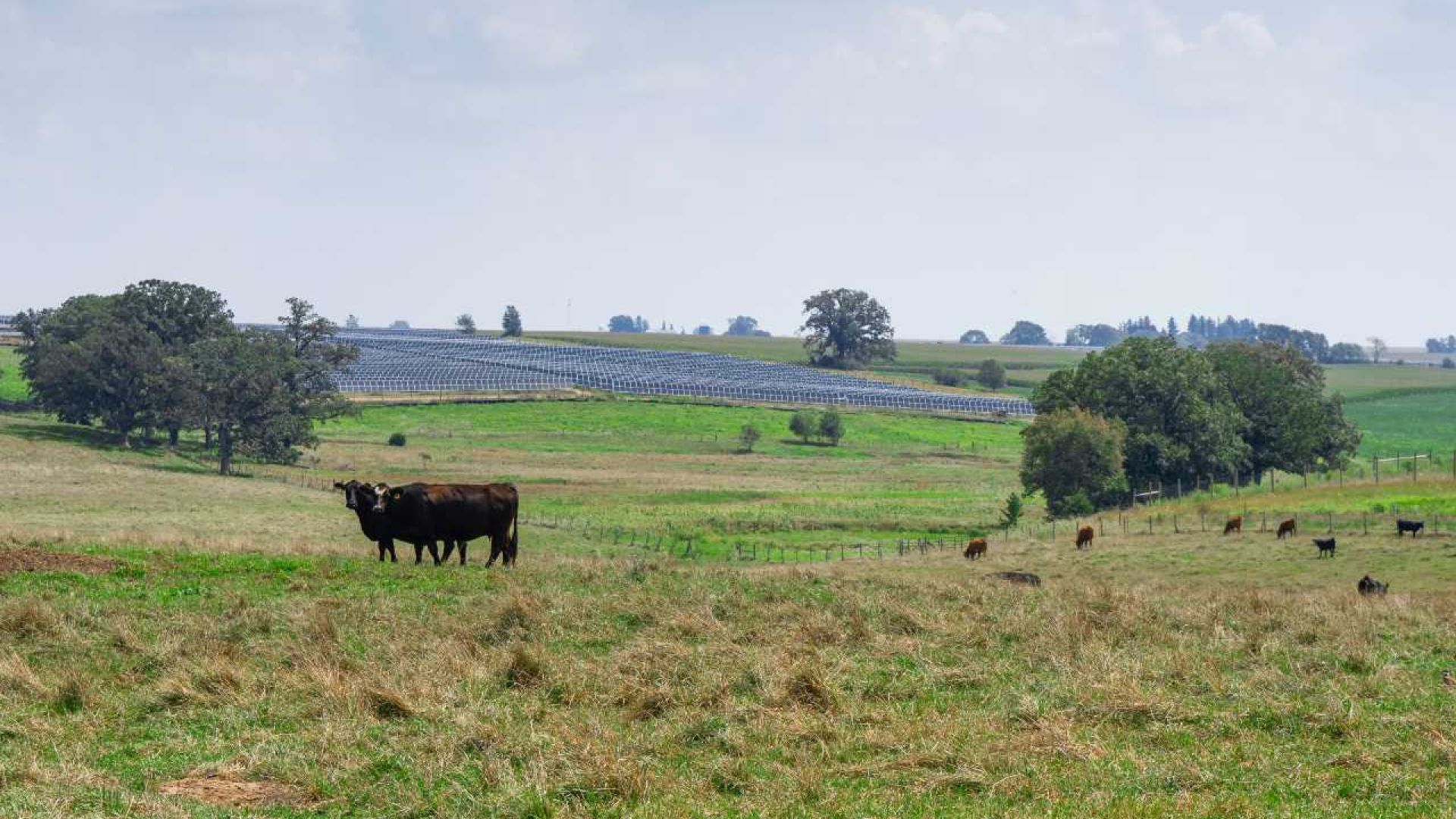
For rural clean energy, the tensions can include everything from sightlines and setbacks to agricultural concerns, access roads, and local tax impacts. But the most common accelerant, at least in the conversations from the week, was misinformation. It isn’t accidental. The example described one recent intentionally misleading narratives and social campaigns designed to confuse rural audiences about solar and its impact on farmers selling their potatoes to Frito Lay. It's all based on human psychology classes - when trust is broken, the brain shifts from rational problem solving to survival. And when that happens, logical compromise becomes almost impossible, which is what makes these misinformation campaigns so powerful and hard to fight.
This was presented as one potential reason why some rural communities aren’t simply resisting projects; they’re responding to a wave of misinformation that fuels survival instincts. And that’s also why one of the proposed solutions isn’t only policy-based. Leah Qusba with GoodPower suggested that the path forward includes messaging and storytelling approaches that treat residents as decision-makers with agency in their own communities, not spectators watching changes happen without having a real say.
There was discussion of “climate hushing,” or the idea that climate issues get softened, delayed, or muted until they feel unreal, distant, or political rather than personal. In response, Tom Steyer rather bluntly laid out a better framework for how we can all avoid hushing. Steyer said instead of talking in scientific terms, talk about how climate change affects day-to-day life, not only policy milestones.
Make it about health, comfort, whether your kids can live safely, and whether the future feels affordable. Make the message personal.
Leaders Building Power in the South
Many voices at Climate Week were powerful. For me, the ones that made the most impact were the leaders who are using their voices to tell the stories of people building clean energy in areas where trust has historically been in short supply.
Jacob Hannah, CEO of Coalfield Development, described what it was like coming from a legacy coal miner family in West Virginia - and by legacy, I mean five generations deep - to creating and sharing a transition model centered on retraining and reskilling coal miners and others in the community, plus incubating local solar capacity. Hannah’s strategy emphasized building new livelihoods on old sites, and leveraging funding to create tangible outcomes. The takeaway wasn’t just clean energy. It was “diversify” and “break the cycle,” with numbers cited to show scale and replication across the region.
And from Georgia, Michelle Moore of Groundswell framed clean energy as a direct response to what people experience first, especially the affordability crises. Her remarks were grounded in kitchens and neighborhoods: repairing homes, improving resilience, and delivering relief that shows up on people’s bills. Moore’s remarks captured a key truth - nowhere does the rubber meet the road harder than rural communities, because every missed opportunity is more expensive when you’re farther from safety nets.
It All Comes Back to Affordability and Reliability
The South is where the climate transition becomes real. It’s where reliability is survival and affordability is dignity.
Climate Week reminded us that the grid is the same everywhere, but the stakes are personal. And when people feel ignored or misled, progress doesn’t stall quietly. It turns into resistance. So we can’t just talk about cleaner energy. We have to earn permission, build partnerships, and move at the speed of trust.
But perhaps of greatest importance: many communities in the Southeast already understand that something is happening around them. They see it everyday through big winter storms like Elliott that cause lasting power outages, or massive inland storms like Helene, or through their increased bills from heating and cooling that are trying to keep up with the extreme temperatures.
If you believe in the future, show up in the present. Attend a Public Service Commission meeting. Learn how to engage with your local leaders about legislation that affects your wallet and the grid.
Let’s build the grid and clean energy solutions with rural communities, on their terms, and with benefits they can measure. What they need are partnerships that respect ownership, dignity, and agency. That’s the story Climate Week kept pointing back to.


