
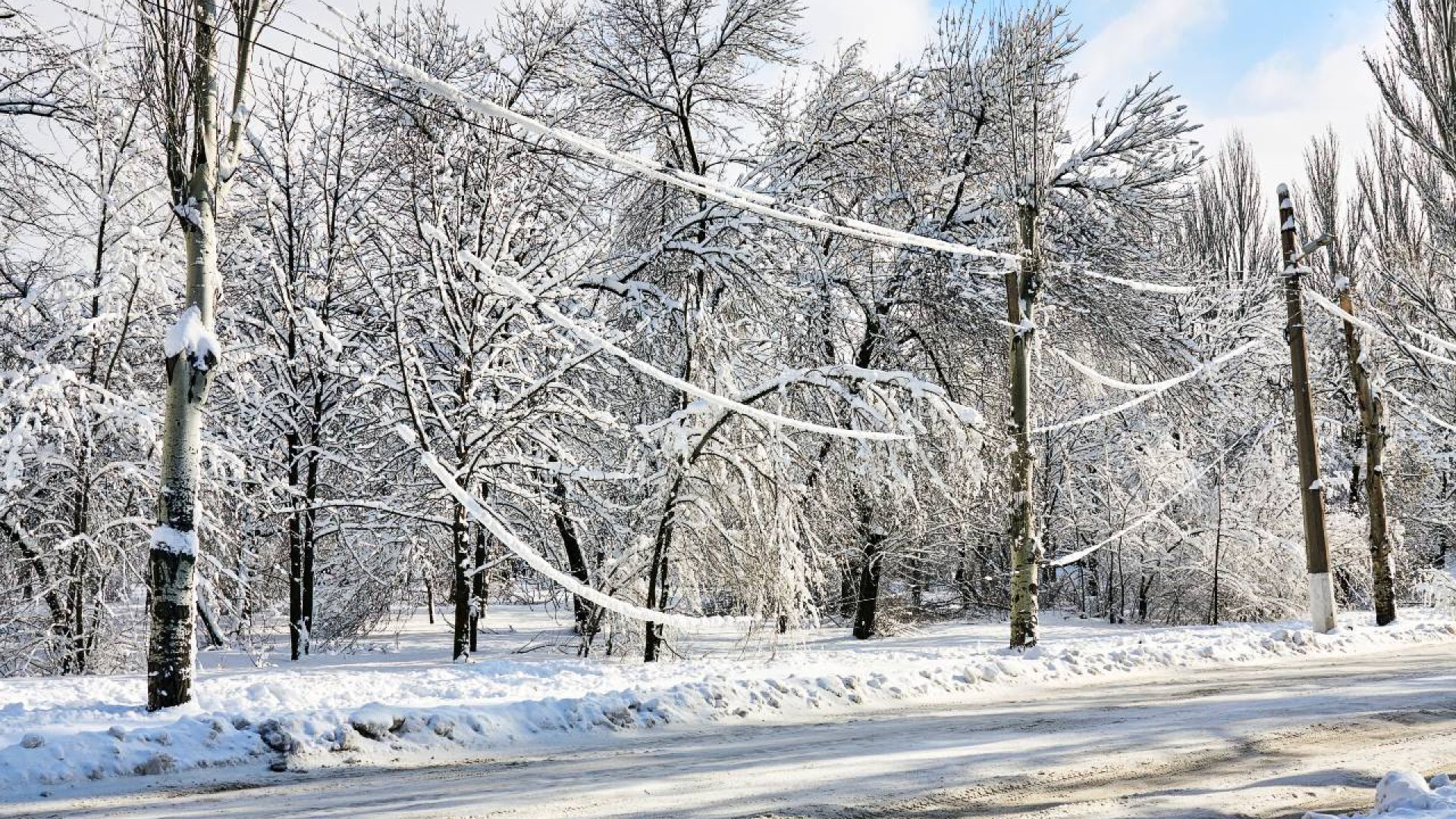
Forecasts for Winter Storm Fern are becoming increasingly concerning. Meteorologists are already comparing the storm to Winter Storm Uri - the event in 2021 that triggered the catastrophic Texas blackout - calling it a potential “worst-case scenario.”
For much of the South, that means prolonged periods below freezing, with heavy snow and significant ice accumulation. Weather experts are also warning that power outages are likely. But why does extreme winter weather pose such a serious risk to the electric grid?
Understanding the answer requires looking at how the grid actually works, and where it is most vulnerable.
Distribution Outages
Distribution outages are the most common cause of power interruptions during winter storms.
The distribution system consists of lower-voltage power lines, typically under 69 kilovolts (kV), that deliver electricity directly to homes, schools, and businesses. These are the lines that criss-cross neighborhoods and run along local roads.
Ice, snow, high winds, and saturated ground can snap lines, topple wooden poles, and stress equipment. Because these outages occur at a local level, they often affect relatively small geographic areas like a street, a neighborhood, or a town.
Restoring distribution service is labor-intensive. Crews must physically locate damaged equipment and “roll trucks” to make repairs one site at a time. While urban areas may see faster restoration, rural communities often experience longer outages. In many cases, repairs can take several hours; however, widespread damage can extend outages even longer.
Transmission Outages
Transmission outages are less common during winter storms, but when they occur, the consequences can be much larger.
The transmission system consists of high-voltage lines that move large amounts of power over long distances from power plants to population centers. These lines are typically mounted on steel or lattice towers, which are stronger and more weather-resistant than distribution poles.
That said, transmission failures do happen. Hurricanes, tornadoes, and extreme weather can bring down major lines. During Hurricane Ida in 2021, all eight transmission lines supplying power into New Orleans failed, cutting electricity to the entire city. Repairs in those cases can take days or even weeks.
Generation Outages
Cold weather doesn’t just affect power lines. It affects power plants too.
Just as cars struggle to start on frigid mornings, power plants are large mechanical systems that rely on fuels, lubricants, electronics, and moving parts that are sensitive to temperature.
In the South, many natural gas, coal, and nuclear facilities are designed primarily to withstand extreme summer heat. But as a result, they are often less prepared for sustained cold weather.
During Winter Storm Uri, approximately 44 percent of thermal power plants in MISO South failed to operate as expected. Thousands of megawatts of generation in Louisiana and Texas are only rated to operate or start up in temperatures above 20 degrees. Very few power plants in the region are designed to function below zero.
When temperatures fall well outside normal operating conditions, power plant failures can escalate quickly.
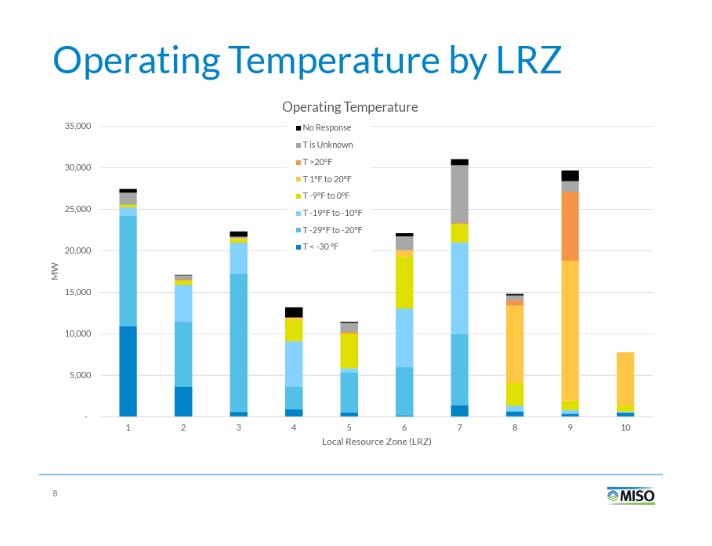
Operating Temperature by Local Resource Zone (8, 9, and 10 are Arkansas, Louisiana/Texas, and Mississippi, respectively)
Fuel Shortages
Contrary to persistent myths, the Texas blackouts during Winter Storm Uri were not caused by frozen wind turbines. They were driven primarily by failures in the natural gas system.
During extreme cold, natural gas wellheads and compressor stations can freeze, events known as “freeze-offs.” When gas production drops, fuel supplies to power plants shrink at the same time demand is surging for both electricity and home heating.
This dynamic played out again during Winter Storm Elliott in 2022, when fuel availability tightened across large portions of the country. As supply falls and demand rises, prices spike - and today, natural gas prices are already roughly 25 percent higher than yesterday.
Another complication is fuel contracting. Unless utilities have purchased firm gas supplies, fuel deliveries are not guaranteed during peak demand periods. Weekend storms pose additional challenges because most gas purchases for Saturday through Monday are locked in during Friday’s scheduling window. Once that window closes, securing additional gas or pipeline capacity becomes extremely difficult.
MISO has proposed new rules to allow multi-day fuel purchasing and planning, but those changes have not yet been approved by the Federal Energy Regulatory Commission (FERC).
Power Shortages
With a localized storm, power can be imported from neighbors where impacts are less severe. Longer-lasting weather systems move through and impact more regions. A bad storm that shows up in Arkansas on Friday and sticks around through Monday can wreak havoc on the electric grid as our neighbors to the east get hit in the following days. During Winter Storm Elliott, Duke Energy utility in the Carolinas could not find neighbors willing to provide power for imports, and had to rely on rolling blackouts to preserve their system. The Southeastern Energy Exchange Market (SEEM), a power trading market in the south, failed to sell any power for nearly three days because neighbors either did not have power to spare or were unwilling to do so.
Inaccurate Forecasts
Grid reliability also depends on accurate forecasting.
Electric systems must maintain a constant balance between supply and demand. But because extreme winter storms are relatively rare in the South, utilities have fewer historical data points to accurately forecast electricity needs.
Underestimating demand can create sudden shortfalls that force emergency actions. During Winter Storm Elliott, the Tennessee Valley Authority (TVA) significantly underestimated load and, despite importing large quantities of power, still had to implement rolling outages to stabilize the system.
Will power outages occur with Winter Storm Fern?
Meteorologists are already urging residents to prepare for potential outages. Unfortunately, most customers will receive little warning until power is lost.
Here are a few steps you can take now:
- Review emergency preparedness guidance from local officials
- Charge phones, battery packs, and medical devices
- Never operate generators indoors
- Report — and do not touch — downed power lines
Useful Tools to Monitor Conditions
- Your utility’s mobile app: Track outage maps and receive alerts. Winter storms typically move west to east, so outages appearing west of your area may signal what’s coming next.
- MISO app and dashboards: Real-time system conditions, load forecasts, market prices, and emergency alerts (EEA 2 or EEA 3). Blue prices indicate surplus supply; red indicates stress. “Max Gen” alerts signal serious system strain.
- GridStatus.io: A user-friendly dashboard for regional grid conditions.
- EIA real-time data: Particularly useful in non-RTO areas like TVA, Southern Company, and Duke territories.
- PowerOutage.us: Aggregated outage data from utilities nationwide.
Preparing for the Future
Extensive studies have been conducted following major winter storms to identify ways to reduce outages.
Over the long term, diversifying the generation fleet with resources that do not rely on fuel delivery or water — such as wind and solar — and investing in additional long-distance transmission can significantly improve grid resilience. During past winter events, renewable resources helped reduce the severity of emergencies and supported system recovery.
Stronger transmission ties between regions also allow utilities to import power from areas not impacted by the storm.
The remaining question is not whether solutions exist. It is whether utilities and decisionmakers will make the investments necessary to keep the lights on.


